BLACK HISTORY IN THE CHURCH

It wasn’t because February was Black History month. It wasn’t because of recent reminders of the landmark struggles and successes of the “Little Rock Nine” in 1957. It wasn’t because of the movie “Hidden Figures,” which I had watched again recently. It was because I wanted to know more about two relatively obscure black gospel preachers that I read two books this past month.
The first book, To Save My Race From Abuse: The Life of Samuel Robert Cassius, was written by Edward J. Robinson and published in 2007. Cassius was born a slave in 1853. He died in 1931. He grew up to be an educator, civic leader, writer, publisher, and an outspoken opponent of racism. As a child he met Abraham Lincoln and Frederick Douglass. He wrote largely for two brotherhood journals, the Christian Leader and the Gospel Advocate.
Brother Cassius was a contemporary with Marshall Keeble. Keeble’s fame far surpassed that of Cassius in part, if not largely, because Cassius was so outspoken on the racial divide among brethren. Cassius said, “It is my purpose to try, as far as in me lies the power, to make the Church of Christ see its duty to the Negro of the United States.”
Most of his evangelistic work was done in the Midwest, California and the southeastern states. He preached in Oklahoma from 1891 to 1922. He was a strong and faithful evangelist of the gospel. He said, “I condemn every attempt to substitute human forms, plans and ideas for the plain written word of God contained in the Bible, believing that God has given us a complete revelation of his will, and that he will not accept any addition to or subtraction from his word.”
Samuel Robert Cassius was one of those powerful yet unknown figures in the church of the by-gone era. His name will never be heard along that of Marshall Keeble’s name, but his influence lives on!
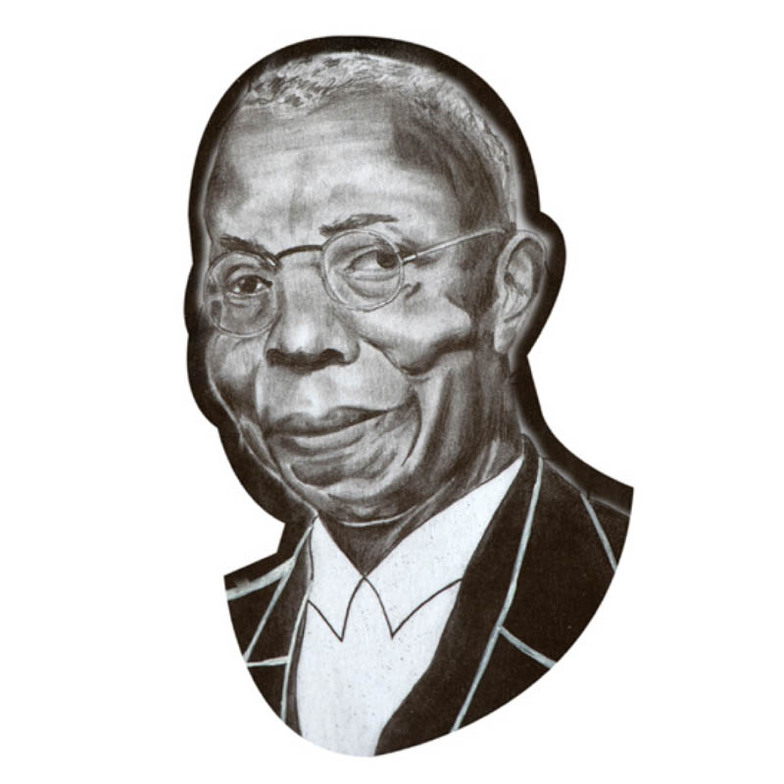
The second person of interest to me last most is George Phillip Bowser. His biography, Undying Dedication: The Story of G. P. Bowser, was written by R. Vernon Boyd and published by the Gospel Advocate Company in 1985. Brother Bowser lived from 1874-1950. Bowser was brought up a Methodist but obeyed the gospel in 1897. In 1902 he began a brotherhood journal called the Christian Echo, for which he wrote the rest of his life. He took an early interest in education. He knew five languages: Hebrew, Greek, French, German and Latin. He worked with the Silver Point Christian Institute along with Annie C. Tuggle. In 1950 he began Southern Bible Institute which later transitioned to become Southwestern Christian College in Terrell, Texas.
It was said that brother Bowser had almost the entire New Testament memorized. When preaching he would customarily hold one hand up in front of his face as if he were holding his Bible and quote extensively from it. He fought racism and segregation all of his preaching life. Whereas Marshall Keeble was willing to “roll with the punches” of segregation in the Jim Crow era, Bowser was not so willing. He could not accept it, and he would not remain silent about it.
Of interest was the time when brother Bowser and his grandson G. P. Holt came to Little Rock. E. R. Harper was preaching for the Sixth & Izard church at the time. Harper helped Bowser set up a tent for a gospel meeting in the black community. When Bowser and Holt came to brother Harper’s gospel meeting for the daytime services, brother Harper met them on the front steps and advised them that it would be wise for them not to come in. Racial prejudice was still very strong at that time. Toward the end of his life he lived with his daughters in Detroit, Michigan. He continued to preach from a chair as long as he was able. Brother Bowser was dedicated, fervently evangelistic, compassionate, trustworthy and devoted to Jesus with a firm resolve to help his people. He died March 23, 1950.